
Plenary speakers deliver 45 minute lectures during the mornings of the scientific SSNR program. The lectures will span broad surveys of recent major developments in the neurorehabilitation field.
More content coming soon, please subscribe to our SSNR mailing list to be alerted on updates.

Spaulding Rehabilitation Hospital and Harvard Medical School, Boston USA
Abstract: Medicine is being fundamentally reshaped by advances in biological sciences and innovations from biomedical engineering. A compelling example of this evolution is the use of robotics and digital health technologies in stroke rehabilitation. Robotics has dramatically advanced motor retraining protocols, enabling the delivery of high-dosage, high-intensity, and task-specific interventions crucial for meaningful motor recovery. Robotic systems enable continuous interaction with patients, allowing for real-time adjustments to the forces that guide movement and promote the learning of new motor patterns. While robotic devices excel at capturing motor performance during training sessions, other critical dimensions of a patient’s response are more effectively assessed via digital health technologies. When integrated with AI-based algorithms, these tools enable the continuous monitoring of a patient’s progress. They generate proxy measures for clinical endpoints, allowing clinicians to personalize and adapt intervention strategies as needed. This data-driven, precision rehabilitation model not only enhances outcomes for stroke survivors but also offers a scalable framework that can be extended across various domains of medicine. As these technologies continue to mature, they hold the promise of enabling proactive, predictive, and patient-specific care. Ultimately, the integration of robotics, digital health, and AI is redefining how we deliver care in rehabilitation and beyond.
Biosketch: Paolo Bonato, Ph.D., is Director of the Motion Analysis Laboratory at Spaulding Rehabilitation Hospital and an Associate Professor of Physical Medicine and Rehabilitation at Harvard Medical School. He holds adjunct appointments at the MGH Institute of Health Professions and Boston University and is a Research Affiliate at MIT. Dr. Bonato’s research focuses on rehabilitation applications of digital health and robotics. He was the Founding Editor-in-Chief of the Journal of NeuroEngineering and Rehabilitation and later the IEEE Open Journal of Engineering in Medicine and Biology. He serves on editorial boards for leading journals, including the IEEE Journal of Biomedical and Health Informatics and Progress in Biomedical Engineering. His leadership roles include service as member of the IEEE EMBS AdCom, IEEE EMBS Vice President for Publications, and President of the International Society of Electrophysiology and Kinesiology. He holds an MS from Politecnico di Torino and a PhD from the University of Rome “La Sapienza.”

Imperial College of London, UK
Abstract: One in six people live with a neurological condition, posing an enormous burden on patients, carers, and healthcare systems. Stimulation-based therapies offer an exciting therapeutic alternative due to their focal and reversible nature. However, current approaches are almost universally limited by side effects, loss of efficacy over time, and effectiveness restricted to a relatively small subset of patients. I will present our recent work on developing and testing stimulation-based therapies designed to overcome these challenges..
Biosketch: Hayriye Cagnan studied Electrical and Electronics engineering at Cornell University as a Fulbright Scholar and specialised in signal processing and biomedical engineering (2000-2004). In 2004, she was awarded a British Chevening scholarship and was accepted to the M.Sc. programme in Engineering and Physical Science in Medicine at Imperial College. Hayriye completed her Ph.D. in Neuroscience in a joint placement between the University of Amsterdam and Philips Research Laboratories in December 2010. Subsequently, Hayriye joined University of Oxford as a postdoctoral researcher and worked on tremor pathophysiology. In 2015, Hayriye was awarded a MRC Skills Development Fellowship in Biomedical Informatics, and was based at the Wellcome Trust Centre for Neuroimaging at University College London. In 2018, Hayriye established her independent research group at the MRC Brain Network Dynamics Unit at University of Oxford after being awarded a MRC Career Development Award..

University of Rome Tor Vergata and Fondazione Santa Lucia, Rome, Italy
Abstract: A central question in motor neuroscience is how the central nervous system coordinates the numerous degrees of freedom of the musculoskeletal system to achieve accurate yet flexible movement. To address this complex control problem, it is hypothesized that the nervous system simplifies motor command generation by combining a limited number of modular building blocks, known as muscle synergies. This lecture will provide an overview of the computational approach based on the decomposition of muscle activation patterns, reviewing key achievements spanning the past 25 years. The presentation will discuss the extraction of muscle synergies across varied motor behaviors in both animal models and humans, alongside causal evidence derived from motor learning paradigms such as “virtual surgeries.” Finally, the lecture will highlight the translation of this foundational research into neurorehabilitation. This includes utilizing muscle synergies as physiological biomarkers to assess motor impairment in conditions like stroke and cerebellar ataxia, and developing personalized, electromyography-controlled virtual reality therapies to actively promote the restoration of functional muscle activation patterns..
Biosketch: Andrea d’Avella (MS in Physics; PhD in Neuroscience) is a Full Professor of Physiology in the Department of Biology at the University of Rome Tor Vergata and a Team Leader at the Fondazione Santa Lucia in Rome, Italy. He earned his PhD from the Massachusetts Institute of Technology in 2000, working in Emilio Bizzi’s laboratory on the neural basis of motor control in frogs and monkeys. Dr. d’Avella has made significant contributions to establishing muscle synergy analysis as a computational approach for studying the modular organization of motor control and its alterations following neurological injury, including the development of a novel algorithm for identifying spatiotemporal muscle synergies. His research has examined muscle synergies in human reaching and the motor strategies used to solve complex, real-world tasks such as catching and throwing. He has also developed an innovative method to probe the modular organization of the motor system through adaptation to virtual surgeries—perturbations of muscle-generated forces simulated in virtual reality using myoelectric control. This methodology has been applied to the control of supernumerary robotic limbs, leveraging musculoskeletal redundancy, and to neurorehabilitation.

Rice University, USA
Abstract: Over the past 35 years, computational modeling and simulation have transformed the design of airplanes, automobiles, and numerous other commercial products. By replacing physical prototypes with virtual prototypes, engineers can now perform design iterations computationally rather than physically, thereby allowing them to develop significantly improved designs in less time and at less cost through the use of numerical optimization methods. Unfortunately, a similar computational process has not yet been explored to design clinical treatments for movement impairments. In this lecture, I will describe the capabilities of the recently developed Neuromusculoskeletal Modeling (NMSM) Pipeline, which is Matlab-based software that adds Model Personalization and Treatment Optimization functionality to OpenSim. The software allows musculoskeletal modeling researchers working in collaboration with clinicians to develop personalized neuromusculoskeletal computer models of individual patients and then use those models to design personalized neurorehabilitation or surgical treatments that maximize each patient’s post-treatment movement function. The lecture will present the history behind the development of the NMSM Pipeline software, describe the functionality available in the software, and present several examples where the software has been used to design clinical treatments that improve walking function for individuals with knee osteoarthritis or stroke..
Biosketch: B.J. Fregly, Ph.D., is a Trustee Professor and CPRIT Scholar in Cancer Research in the Departments of Mechanical Engineering and Bioengineering at Rice University. B.J.’s research focuses on personalized modeling, simulation, and optimization of the human neuromusculoskeletal system. He is the director of the Rice Computational Neuromechanics Lab, which is seeking to make computational design of personalized treatments for movement impairments a clinical reality. To support that effort, B.J.’s research group recently released the Matlab-based Neuromusculoskeletal Modeling (NMSM) Pipeline software, which adds Model Personalization and Treatment Optimization functionality to Stanford’s OpenSim musculoskeletal modeling software. B.J.’s lab is currently using the NMSM Pipeline to explore computational treatment design for stroke neurorehabilitation, knee osteoarthritis surgical planning and rehabilitation, and pelvic cancer surgical planning.

Politecnico di Milano, Italy
Abstract: The scientific literature has long grappled with the open challenge of understanding how movement is re-learned, proposing a range of theoretical frameworks. For any such theory to be practically useful, however, it must help address two fundamental questions: what are the neural mechanisms underlying motor skill learning, and how can this knowledge inform the design of effective neurorehabilitation strategies for movement disorders?
In this lecture, we will be tracing a translational pathway from neuroscience to technology. Starting from insights derived from neuroimaging studies (e.g., fMRI), we will examine how principles of motor relearning can inform the design of robotic systems for neurorehabilitation. We will then discuss how these principles are embodied in device development, and how they shape considerations of usability, human–robot interaction, and clinical validation.
Biosketch: Marta Gandolla (1985) obtained her European PhD in Bioengineering from Politecnico di Milano in 2013. She carried out research activities at Politecnico di Milano, the UCL Institute of Neurology (UK) and at Fondazione Don Carlo Gnocchi (Rome). She is currently an Associate Professor in the Department of Mechanical Engineering at Politecnico di Milano.
Her scientific work focuses on the mechanical and control design of exoskeletons, rehabilitative and assistive devices, their experimental validation, and the development of technologies aimed at reducing the biomechanical load on workers’ musculoskeletal systems. She collaborates actively with the WE-COBOT laboratory and has contributed to technology transfer in the field of assistive robotics as co-inventor of three patents and co-founder of the start-ups AGADE and AllyArm.
She teaches courses in Applied Mechanics of Machines (Bachelor’s degree), Collaborative Robotics and Paralympics and Sport Rehabilitation (Master’s degree), and Healthcare Robotics (MEDTEC program).
She serves as Associate Editor for the international journals IEEE Transactions on Neural Engineering and Rehabilitationand IEEE Transactions on Medical Robotics and Bionics.

ETH Zurich, Switzerland
Abstract: Hand function is central to functional independence, yet remains particularly vulnerable to neurological injury. Motor and somatosensory impairments often limit the ability to grasp, manipulate, and interact with the environment, with long‑lasting consequences for participation in daily life. While clinical rehabilitation can improve hand capacity, these gains frequently fail to translate into sustained hand use outside the clinic.
This talk explores how technology‑supported therapy and assistance can help bridge this gap between capacity and real‑world performance. Robotic and wearable systems enable early, intensive, and task‑oriented training, extend therapy beyond supervised settings, and support hand use when recovery is incomplete. Drawing on examples such as the ReHandyBot for unsupervised robot‑assisted hand therapy and the tenoexo robotic hand orthosis, I will illustrate how technology can maximize therapy intensity early after injury and promote functional use and independence in the long term.
I will address current challenges in assessing hand performance in daily life and discuss emerging approaches to promote meaningful hand use beyond structured therapy. Finally, I will argue that the distinction between therapeutic and assistive devices will increasingly dissolve. Future wearable rehabilitation technologies will adaptively provide the minimal assistance required to drive recovery, and seamlessly evolve into compensatory support once a functional plateau is reached—reshaping how we think about therapy, assistance, and independence after neurological injury.
Biosketch: Roger Gassert is a Professor of Rehabilitation Engineering at ETH Zurich. His research centers on the development and clinical validation of technologies to explore, assess, and restore sensorimotor function in neurological disorders, with the goal of improving independence. He earned an M.Sc. in microengineering and a Ph.D. in neuroscience robotics from EPFL, and his early work included creating the first MRI-compatible haptic interfaces for safe human interaction during functional imaging.
Roger is Vice-Chair of the ETH Competence Centre for Rehabilitation Engineering and Science, President of the Swiss foundation Access for all, national contact person for the Association for the Advancement of Assistive Technology in Europe (AAATE), and co-founder of ETH spin-offs Auxivo, which develops wearable exoskeletons, and Optohive, which develops next-generation portable brain imaging solutions. His research interests span physical human–machine interaction, rehabilitation robotics, assistive technology, wearable sensors, haptics, and the neural control of movement, with a strong emphasis on interdisciplinary translation and clinical impact.

Head of Research Germany, Ottobock SE & Co. KGaA
Abstract: Most great prototypes don’t fail because they don’t work. They fail because working was never enough. Between a promising idea and real-world impact lies a gap where usability, timing, economics, and human behaviour determine what survives, and what doesn’t. Technical excellence gets you to the edge. It doesn’t carry you across.
Drawing on examples from academia–industry collaborations, this talk examines what actually does: tracing ideas that changed practice alongside those that didn’t, despite strong technical merit. The result is an honest look at why innovation demands more than good science, and what it takes to build something that truly matters..
Biosketch: Dr. José González-Vargas is Head of Research in Germany at Ottobock SE & Co. KGaA, where he leads the German Research Hub focused on translating advanced research into market-ready healthcare products. His work spans lower- and upper-limb prosthetics, orthotics, AI data analytics, Digital processes, and rehabilitation robotic systems, with a strong emphasis on real-world impact and clinical usability.
He specializes in human–machine interfaces, robotics, and neuro-rehabilitation technologies, with extensive experience in prosthetic and orthotic system design, machine learning–based control, embedded electronics, and advanced control algorithms. His work bridges fundamental research and industrial innovation, driving the development of intelligent, user-centered assistive technologies.
Dr. González-Vargas is actively involved in European and German-funded research initiatives and previously served as coordinator of the Marie Skłodowska-Curie Action project SimBionics. He has led multidisciplinary and international teams across academia and industry, delivering complex projects efficiently and at high technical quality.
He holds a degree in Electronic Engineering from the Tecnológico de Costa Rica and completed a Master’s in Artificial System Engineering and a PhD in Medical System Engineering at Chiba University, Japan. His academic career was supported by the MEXT Scholarship and the JSPS Young Research Fellowship. Prior to joining Ottobock, he held research positions at Chiba University, the University Medical Center Göttingen, and the Spanish National Research Council (CSIC), focusing on neural rehabilitation and assistive robotics.

Northwestern University, Chicago, USA
Abstract: The greatest desire for most people with high-level spinal cord injury is for restored hand movement. My lab developed an intracortical brain-computer interface (iBCI) in monkeys that used recordings of single neurons in the motor cortex to make real-time predictions of muscle activity. These, in turn, we used to control Functional Electrical Stimulation (FES) of the muscles of the monkey’s hand, muscles which were temporarily paralyzed by a peripheral nerve block. This “biomimetic” iBCI allowed more nearly natural control not only of the motion of the monkeys’ wrist and fingers, but also well-controlled grasp force, which kinematic iBCIs struggle to accomplish. Beyond the ability to immediately restore voluntary limb movement, there is evidence that the tight synchrony between a user’s attempted movement and the peripheral stimulation, may invoke mechanisms of neural plasticity that could accelerate recovery from SCI. In this talk I will describe the early work that led to our proof-of-concept demonstration in monkeys, as well as our later work to extend the methods to a wider range of motor activities. These varied activities occupy different regions of neural state space and represent an added challenge for decoding. Finally, I will describe our current work to extend this approach to humans, first in a virtual setting, and ultimately through FES.
Biosketch: For most of my academic career, I have done work that addresses basic properties of the neural control of reaching and grasping. My early training in Physics and Engineering has very much influenced my approach to these problems, which tends strongly to the quantitative. The recent growth of neural engineering has provided a productive avenue for the transformation of my basic research into a more applied, translational line of work. We have developed a very successful efferent interface that restores hand use to temporarily paralyzed monkeys using Functional Electrical Stimulation (FES) of the paralyzed muscles that is controlled in real time by motor cortical (M1) recordings. That project now uses wireless recording of both neural and EMG signals while the monkey is in its home cage, which affords us the unique opportunity to collect virtually unlimited datasets for decoder training during unconstrained, natural behavior. These datasets have allowed us to study the representation of hand use by M1 neurons across a wide range of natural behaviors, and to compare these representations to those of more typical constrained lab tasks. However, this particular model of SCI lacks critical elements, including muscle atrophy, denervation, and the opportunity for recovery of function through neuroplastic changes in spinal circuitry and in spared descending projections. For this reason, we have also developed a rodent model of cortically-controlled FES that we are using to restore locomotion in a rat with an actual lumbar hemisection. The project combines neuromuscular and spinal stimulation delivered wirelessly through an implanted device of our design.

Villa Beretta Rehabilitation Research Innovation Institute and Rehabilitation Center, Costa Masnaga, Italy
Abstract: Recovery from neurological injury is an active, experience-dependent biological event governed by the rules of neuroplasticity. This lecture proposes a paradigm shift: rehabilitation robots are not merely mechanical effectors — they are cobots, cooperative agents capable of translating the layered intentionality of both patient and clinical team into precisely dosed, biologically meaningful therapeutic acts.
When volitional engagement with a robotic device is timed and amplified by multimodal neuromodulation — transcutaneous spinal cord stimulation, peripheral neurostimulation, non-invasive brain stimulation — the resulting neural event becomes a high-impact neuroplastic stimulus, recruiting dormant circuits, shifting excitatory/inhibitory balance, and engaging metaplastic cascades that outlast the session itself.
This triadic framework — cobot as intention transducer, neuromodulation as biological priming, purposeful movement as irreducible therapeutic signal — will be illustrated through clinical evidence from post-stroke rehabilitation, and projected toward emerging AI-driven closed-loop systems capable of reading the patient’s neural state in real time to sustain the biological window of maximum plasticity.
The ultimate goal: an ecosystem in which engineers and clinicians design together a sustained neuroplastic environment — not an occasional event, but a continuous therapeutic infrastructure.
.
Biosketch: Dr. Franco Molteni is the Scientific Director of Villa Beretta Rehabilitation Research Innovation Institute and the Clinical Director of Villa Beretta Rehabilitation Center. He has 40 years of experience in Rehabilitation Medicine and specializes in instrumental movement analysis and multimodal rehabilitative treatments using advanced technologies like robotics, Deep Brain Stimulation (DBS), and Functional Electrical Stimulation (FES).
Dr. Molteni has collaborated on several research projects with various national and international institutions, including Politecnico di Milano, the Institute of BioRobotics in Pisa, Consiglio Nazionale delle Ricerche (CNR), École Polytechnique Fédérale de Lausanne (EPFL), University of Vienna, and Imperial College of London. He is a member of many scientific institutions like the International Society of Physical and Rehabilitation Medicine, the Italian Society of Physical Medicine and Rehabilitation, and the Italian Society of Neurorehabilitation. Dr. Molteni is also involved in educational activities as the co-director of the RehabTech Master at Politecnico di Milano and serves on the Scientific Advisory Board for various pharmaceutical and hi-tech companies.
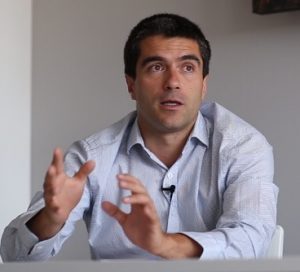
Department of Neurology, Clínica San Miguel. Coordinator of the Brain Injury Program at Hospital Aita Menni. Head of the Neurorehabilitation Unit, Hospital Ciudad de Telde, ICOT Group, Spain
Abstract: A major challenge in neurorehabilitation is the discrepancy between patients’ performance within rehabilitation settings and their abilities in real-world environments. Many neurological patients achieve satisfactory motor recovery during conventional therapy while continuing to experience instability and falls once they return home. This gap highlights the limitations of rehabilitation approaches.
Increasing evidence has shown that deficits frequently emerge or increase under dual-task conditions, when cognitive and motor demands are combined, reflecting the complexity of daily life. The systematic study of dual-task interference has demonstrated significant deterioration in gait, balance, and functional performance in neurological patients, emphasizing the importance of integrating cognitive-motor interaction into rehabilitation strategies.
At the same time, these advances have exposed important limitations within the field, including the lack of standardized and clinically practical assessment tools, as well as the need for accessible technologies capable of providing ecological dual-task training beyond specialized rehabilitation units. This has stimulated the development of new assessment protocols and innovative technological solutions, progressively evolving toward compact and home-based systems designed to facilitate long-term rehabilitation in everyday environments.
During this presentation, the full translational journey will be explored: from the initial detection of a real clinical problem, through its systematic study and analysis, to the continuous development of assessment methods and therapeutic strategies aimed at improving neurorehabilitation outcomes in daily life.
Biosketch: Dr. Manuel Murie Fernández, MD, PhD, completed his trained in Neurology at the Department of Neurology of the Clínica Universidad de Navarra.Following residency, his professional and research interests became focused on neurorehabilitation. He was awarded a postgraduate fellowship to complete advanced training in Neurorehabilitation at the Western University.
His work has been particularly focused on brain injury, functional recovery, dual-task assessment and training, and the integration of technology into neurorehabilitation. Throughout his career, he has promoted a translational approach aimed at connecting clinical needs with engineering and technological development, facilitating collaboration between clinicians, researchers, and technology developers to generate practical solutions for real-world rehabilitation challenges.
He currently serves as Director of the Department of Neurology at Clínica San Miguel, Coordinator of the Brain Injury Program at Hospital Aita Menni, and Head of the Neurorehabilitation Unit at Hospital Ciudad de Telde within the ICOT Group. He is also Scientific Director of the Canary Islands Institute of Neurological Sciences Foundation.
From 2012 to 2018, he served as President of the Spanish Society of Neurorehabilitation and is currently a member of the Scientific Panel on Neurorehabilitation of the European Academy of Neurology. He has also been profesor of Neurology at the Public University of Navarra.

Technische Universität München, Germany
Abstract: Recreating the remarkable sensory-motor capabilities of the human hand has been a longstanding challenge at the intersection of science, engineering, and medicine. Recent advances in soft robotics, neural interfacing, and neuroscience are now enabling a new generation of bionic limbs that move beyond purely functional replacement toward more natural and embodied interaction. This talk explores how bioinspired principles derived from human motor control can guide the development of intuitive and adaptive prosthetic systems. In particular, it focuses on two key concepts observed in biological systems: the intrinsic compliance of musculoskeletal structures and the synergistic organization of human movement. By translating these principles into robotic technologies, it becomes possible to design prosthetic devices that are not only mechanically robust and dexterous, but also more seamlessly integrated with the user. Bridging robotics, neuroscience, and rehabilitation, this interdisciplinary research is driven by both scientific understanding and clinical translation. Beyond restoring functionality, the ultimate goal is to develop human-centered bionic technologies that enhance embodiment, usability, and social reintegration for individuals with limb loss.
Biosketch: Cristina Piazza is Tenure-Track Assistant Professor for Healthcare and Rehabilitation Robotics at the Technical University of Munich (TUM). She received her B.Sc. in Biomedical Engineering, M.Sc. in Automation and Robotics Engineering, and Ph.D. in Robotics (summa cum laude, 2019) from the University of Pisa, Italy. Subsequently, she joined the Northwestern University and the Shirley Ryan AbilityLab in Chicago, USA, as a postdoctoral researcher. Her research focuses on rehabilitation and assistive robotics, with particular emphasis on bioinspired prosthetic systems, soft robotic technologies, neural and myoelectric control, and the study of human motor behavior. She has received several international recognitions, including the IEEE/RAS Early Academic Career Award 2026, the Kevin P. Granata Award 2026, and multiple Best Paper Awards at leading robotics conferences. She is actively involved in the international robotics community, serving as Co-Chair of the IEEE/RAS Technical Committees on Robotic Hands, Grasping and Manipulation and on Cyborg and Bionic Systems. She serves as Associate Editor for IEEE Robotics and Automation Letters and IEEE Transactions on Biomedical Engineering, and has held editorial and organizational roles for major international conferences, including being the General Chair of the IEEE/RAS International Conference on Cyborg and Bionic Systems (CBS 2026).

The Hong Kong University of Science and Technology, Hong Kong
Abstract: Neurological diseases and injuries that damage neural transmission pathways can lead to serious disabilities in brain function. For example, Alzheimer’s disease can impair memory, while spinal cord injuries can cause paralysis. To address these challenges, we have developed an artificial information pathway that bypasses the damaged areas. This pathway directly transforms brain signals from active upstream neurons into real-time predictions for downstream neurons, allowing biomimetic communication between disconnected brain regions. Restoring this information flow induces the functional connectivity in the affected areas and facilitates real-time movements. This approach offers new methods for motor rehabilitation for patients with functional impairments due to neural damage and even provides new rehabilitation opportunity for patients with advanced cognitive function injuries.
Biosketch: Yiwen Wang received her B.S. and M.S. degrees from the University of Science and Technology of China (USTC) and earned her Ph.D. from the University of Florida. From 2010 to 2016, she served as an Associate Professor at Zhejiang University in China and is currently an Associate Professor with substantiation in the Departments of Electronic and Computer Engineering and Chemical and Biological Engineering at the Hong Kong University of Science and Technology.
Her research interests include neural decoding in brain-machine interfaces, adaptive signal processing, and neuromorphic engineering. She has held leadership roles such as Chair of the IEEE EMBS Neural Engineering Technical Committee and Editor-in-Chief of the IEEE Brain Newsletter. She is currently on the editorial board of the Journal of Neural Engineering and serves as an Associate Editor for the IEEE Transactions on Neural Systems and Rehabilitation Engineering.
Recognized as an IEEE EMBS Distinguished Lecturer in 2022, she received the IEEE EMBS Distinguished Service Award in 2023 and was a keynote speaker at the IEEE EMBS Annual Conference 2024. She holds two U.S. patents and has authored over 150 peer-reviewed publications.

National Center for Adaptive Neurotechnologies
Albany Stratton VA Medical Center and State University of New York
Albany, New York, USA
Abstract: Neurorehabilitation is among the most vibrant areas of biomedical research. Its main strategy has been skill-specific practice, which often fails to produce adequate recovery. Now, new recognition of central nervous system (CNS) plasticity, new understanding of skills, and new technologies provide new strategies that enhance the efficacy of practice. The substrate of a skill is a network of neurons and synapses that extends from cortex to spinal cord and is now called a heksor. A heksor changes continually to maintain the key features of its skill, the attributes that make the skill satisfactory. Muscle activity and kinematics may change; key features are maintained. Heksors share neurons and synapses. Through their concurrent changes, they keep the CNS in a negotiated equilibrium that enables each to maintain its skill. When CNS damage occurs, the goal is to enable damaged heksors to repair themselves. Two new strategies enhance the efficacy of skill-specific practice. One increases plasticity. A damaged heksor shapes the additional plasticity through practice. The other targets beneficial plasticity to a critical site in a damaged heksor. This improves practice, enabling the heksor to achieve wider beneficial plasticity. In animals and humans, protocols that combine these strategies with practice enhance lasting recovery. The challenge is to develop, optimize, and validate these combined protocols. Computational modeling can accelerate the process. Controlled trials and comprehensive outcome assessments are essential. Pre-morbid factors and physiological measures may identify biomarkers that can predict efficacy or guide patient-specific protocol design. Many combined protocols will be noninvasive and suitable for home use.
Biosketch: Dr. Wolpaw is a neurologist who has spent 50 years exploring spinal cord and brain plasticity in animals and humans. His lab originated the protocol for operant conditioning of spinal stretch reflexes. Together with Drs. Xiang Yang Chen, Jonathan Carp, and Yu Wang, he led extensive physiological and anatomical studies that revealed the complex plasticity in spinal cord and brain associated with this ostensibly simple learning. They showed that appropriate reflex conditioning improves walking in rats with spinal cord injuries. With Dr. Aiko Thompson, they found that reflex conditioning improves walking in people with spinal cord injury. This work has led to a new paradigm for how skilled behaviors are acquired and maintained in what is now understood to be a ubiquitously plastic CNS. This new paradigm leads to new therapeutic strategies that are proving successful in clinical studies. Dr. Wolpaw has also been deeply involved in brain-computer interface (BCI) research. He and Dr. Dennis McFarland first showed the value of EEG sensorimotor rhythms for BCI-based communication and control, including multidimensional control. Their group oversaw the first multicenter trial of a BCI for independent home use by people with severe disabilities. They developed and disseminated the general-purpose software platform BCI2000, which has supported nearly 3,000 peer-reviewed studies world-wide. They organized the first four international BCI conferences, contributed greatly to the first BCI textbook (Wolpaw & Wolpaw 2012), and are now involved in editing the second edition. Dr. Wolpaw’s research has been supported for over 40 years by NIH, the VA, DARPA, and private foundations. He is Director of the NIBIB/NIH-funded National Center for Adaptive Neurotechnologies (NCAN) and Professor of Biomedical Sciences at the State University of New York. His group’s work has been described in many papers, invited presentations, and lectureships, and recognized by national and international awards. Many students and postdocs have participated and received appropriate recognition. He has contributed to the national and international scientific communities by serving on many advisory committees and review panels and was the first president of the BCI Society.